
ACE-PCF Annual Conference 2024
A way forward for public body leadership: realising talent and potential
20 February 2024
Event summary


Along with significant economic and societal shifts, the working environment and reform for public service have created both challenge and opportunity for public body leadership. Within this context, this year’s ACE and PCF annual conference explored ‘A way forward for public body leadership: realising talent and potential’. ACE and PCF members – Chairs, CEOs, Executive and Non-executive teams of public bodies – discussed how we can, collectively, make the public appointments system better, how we can attract greater diversity of talent into our community and how we get the best out of the talent that exists within public bodies.
Public bodies are being asked to deliver more, with less. They are often only noticed when they are perceived as having done something wrong, whilst being given little credit for their successes. This can make it challenging to generate interest in talent coming into public bodies. At the same time, appointments processes are often delayed, affecting the ability of boards and leaders to be in control of delivering effective leadership for their organisations.
However, there has also been positive and promising progress towards realising talent and potential, from a growing commitment to diversity, to amendments to the governance code, to the success of the UK Boardroom Apprentice Programme.
With thanks to our speakers:
- Baroness Lucy Neville-Rolfe DBE CMG, Minister of State for the Cabinet Office
- Baroness (Estelle) Morris of Yardley
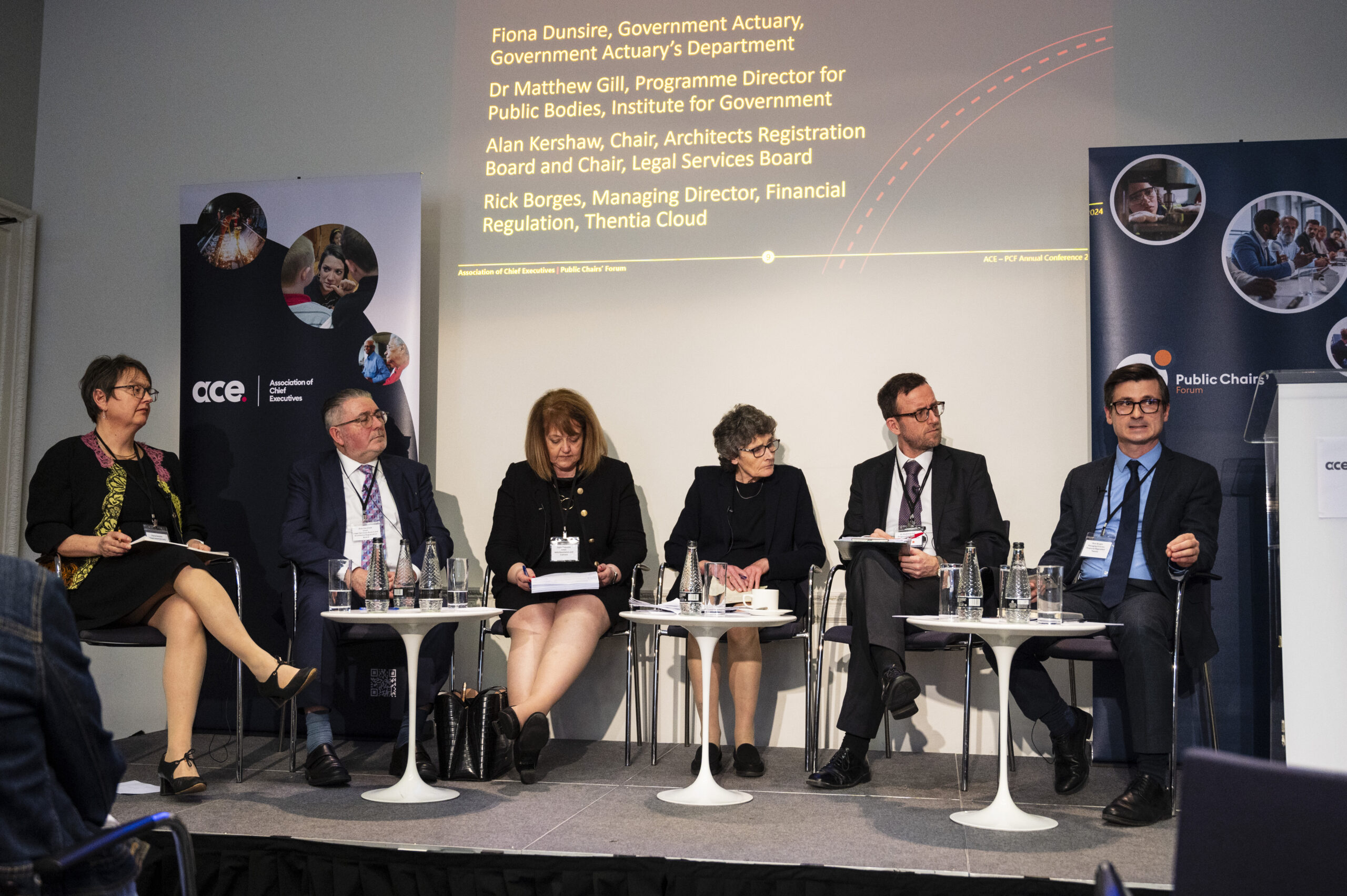
- Rick Borges, Managing Director, Financial Regulation, Thentia Cloud
- Nathan Bransden, Director of Strategy and Advisory, Ipsos
- Kerry Broomfield, UK Boardroom Apprentice Project Manager, Department for Levelling Up Housing and Communities
- Colum Conway, Chief Executive, Social Work England
- Fiona Dunsire, Government Actuary, Government Actuary’s Department
- Dr Gillian Fairfield, Chair, Disclosure & Barring Service and Armed Forces Pay Body Review Member
- Manpreet Gill, UK Boardroom Apprentice 2023
- Dr Matthew Gill, Programme Director for Public Bodies, Institute for Government
- Lord Hogan-Howe, Non-Executive Board Member, Cabinet Office
- Alan Kershaw, Chair, Architects Registration Board and Chair, Legal Services Board
- Michael Lawrie, Director, Health and Social Care team, Ipsos
- Natalie Prosser, Chief Executive, The Office for Environmental Protection
- Sir William Shawcross, The Commissioner for Public Appointments, Office for the Commissioner of Public Appointments
- Jessie Wilson, Associate Director, Ipsos
And our hosts and moderators:
Conference hosts
- Helen Pitcher OBE, PCF chair
- Martin Jones CBE, ACE chair
Panel hosts and moderators
- Richard Bond, Innovation and Engagement Director, The Coal Authority and EDI Forum Chair for ACE & PCF
- Sally Cheshire CBE, Chair NHS Resolution, Cafcass, and PCF Management Committee Member
- Steve O’Donoghue FCPFA, Executive Director, Trade Remedies Authority
Baroness Neville-Rolfe: Championing the work of public bodies
Baroness Lucy Neville-Rolfe DBE CMG, Minister of State for the Cabinet Office, opened the conference by underscoring the significance of public service and the vital role of public bodies in delivering it. She highlighted the government’s commitment to diversity – concerning priorities to spread opportunities beyond London and to increase approaches to diversity of thought on boards. Noting inefficiencies in the appointments process for public body boards, Baroness Neville-Rolfe emphasised the need for strategic planning and better candidate care to attract and retain high-quality candidates. She highlighted her work to champion public bodies on awareness roadshows across the UK, noting that this is a crucial part of attracting high-quality talent.
Pathways to public service
In conversation with Baroness Neville-Rolfe, panellists shared their different pathways into public service roles. All shared a strong motivation to contribute to public service, although some took unconventional journeys to reach their current positions. They highlighted the difficulty of attracting those with frontline experience to board positions, in some sectors or regions.
Strategies for improvement
Members shared concerns about systemic issues in recruitment processes and the need for post-appointment support to nurture talent. Panellists acknowledged these challenges and discussed improvement strategies, including advocating for changes in recruitment criteria to prioritise passion and commitment rather than purely experience, as well as engaging with recruitment agencies to broaden the scope of potential candidates. Additionally, efforts to demystify public service roles, improve communication about job opportunities, and provide ongoing support and feedback to candidates were emphasised.
Ipsos: Setting and changing direction in complex and uncertain times
The mid-morning keynote came from Ipsos, one of the UK’s leading research companies, who are also partnering with ACE and PCF this year. Ipsos uses polling and policy evaluation to generate evidence to assist leaders in shaping and refining policy initiatives.
Trends and concerns
Drawing from their extensive time series data, Ipsos noted concerning trends within the public sector, with a significant portion of the population expressing pessimism about the state of UK. Key concerns include inflation, healthcare, the economy, and immigration. Economic optimism has reached historic lows, and there’s widespread apprehension about declining public services, with opposition to spending cuts.
Addressing current challenges
Ipsos highlighted several key themes:
- the importance of fairness,
- the resurgence of local policymaking,
- the integration of new technologies, and
- the need for holistic problem-solving approaches that engage the public.
To navigate these challenges effectively, Ipsos shared three main recommendations:
- Leverage evidence to inform strategic direction.
- Foster a culture of learning from evidence, encouraging staff to interpret data and embrace experimentation.
- Prioritise public engagement, recognising the growing importance of citizen voices in policymaking decisions.
Evidence-based policymaking
Members raised the practicality of evidence-based policymaking in delivering outcomes, especially given the time needed for consultation and policy development. Panellists stressed the importance of establishing an evaluation framework early, collaborating between professions to pilot and prototype, and developing more nuanced questions to evaluate whether a policy intervention delivered intended outcomes.
Public trust and accountability
While public trust in politicians is low, public trust in civil servants is much higher, offering hope to public bodies which aim to further build and maintain trust with the public. Members discussed the importance of greater public engagement, for example reintroducing a personal element to the ‘customer journey’ with public bodies. Raising awareness about public body initiatives was also discussed, as Ipsos noted that projects with public recognition tend to attract more trust.
Baroness (Estelle) Morris of Yardley: Being prepared for change
Telling the story of public bodies
Baroness (Estelle) Morris of Yardley spoke in her personal capacity. She stressed the importance of telling the positive story of public sector organisations to address the challenges they face, and of promoting the existing positive aspects of public sector culture.
She acknowledged the challenges within the public sector, including poor recruitment, inadequate resources, a dysfunctional public appointments system, low morale, and disparities between leadership and frontline staff.
In addressing these challenges, Estelle noted the significance of effective leadership, the need for regulation to adapt and improve, and the importance of workforce planning, flexibility, professional development, and targeted recruitment initiatives.
Journeys to public body leadership
Panellists explored their various paths to public body leadership, emphasising the positive impact on people’s lives as a motivating factor. Some were initially deterred from the public sector due to concerns about the interview process, bureaucracy, and remuneration. However, some panellists reflected on the surprising similarities between the public and private sectors with regards to bureaucracy.
Investing in people
Panellists discussed the value of prioritising training and development, and ensuring accountability and support for everyone, including senior leaders. The landscape of work is evolving, driven by new generations and diversity, which calls for adapting approaches accordingly.
Improving public appointments
Panellists discussed a need to improve the public appointments process, citing recent data showing appointments now take an average of seven months. They emphasised the importance of collecting more data to understand the causes of these delays, and proposed tracking appointments processes at a granular level to identify and address issues effectively. While diversity has improved, there remains a need to address barriers for individuals from less privileged backgrounds.
Managing technological change
There is an increasing demand for 24/7 digital services, while maintaining robust data protection. Aritificial Intelligence (AI) can be used positively to support decision-making and enhance talent retention. Possible solutions were offered by Thentia, a technology firm specialising in regulatory software, which is incorporating AI into their products and is engaging stakeholders to ensure ethical implementation. Organisations were advised to carefully map out processes before seeking technological solutions, ensure there are digital skills and confidence on boards, and to consider the accessibility of new technology to all members of the public.
Sir William Shawcross: Attracting and nurturing talent
Sir William Shawcross, The Commissioner for Public Appointments, engaged in a lively discussion with members on the public appointments process, focusing on timeliness, recruitment, and diversity.
Timeliness of the appointments process
Members shared their concerns about delays in appointments, noting that good candidates can get lost in the process. Some shared perspectives that there are apparent rigidities in the system, compared with the private sector, that may need to be addressed.
Diversity of appointments
Members noted the difficulty of recruiting a diverse pool of candidates. They discussed the nuances of recruiting diverse people to the board, in comparison with the full inclusion of these individuals in board decision-making, and ensuring their perspectives are valued.
Members also shared recruitment challenges in balancing a desire for candidates with a diversity of thought and experience with the need for candidates with deep skills and expertise in the sector. Members identified important parts of the solution as being the demystification of public bodies and the appointments process itself, as well as candidate care and increased regional outreach.
UK Boardroom Apprentice Programme: Keeping pace with change and being evidence-led
Kerry Broomfield, UK Boardroom Apprentice Project Manager, and Manpreet Gill, a UK Boardroom Apprentice, shared their insights on the UK Boardroom Apprentice Programme. This offers 12-month placements on public and third sector boards, providing a safe space to develop board member skills. It aims to raise awareness of board positions and create a talent pipeline for recruitment.
Evaluating impact with data
Evaluation of the programme includes pre- and post-programme surveys to track knowledge progression and feedback on programme delivery. Adapted from a Northern Ireland model, it includes host board surveys to assess support and apprentice progress. This data highlights the programme’s potential to diversify board representation and empower participants to see themselves as leaders.
Members discussed various ways in which their organisations are seeking to better use data, including to identify skills gaps, track and improve diversity, and promote transparency around promotion rates and progression. However, even when presented with accurate data on diversity, for example, members noted that pipeline issues make it challenging to fix the lack of diversity at senior levels. They discussed the importance of going beyond data collection to actually using data intelligence to inform and implement change.
Following these discussions, the conference concluded with an afternoon tea and networking.
What next?
This year’s conference has book-ended another busy year for ACE and PCF and we have enjoyed having the support of a growing membership of public bodies.
To continue to grow and develop ACE and PCF, the Secretariat are keen to ensure that members are getting the most out of their membership experience and are supported with professional development, learning and networking opportunities that meet your changing needs.
Supported by Ipsos, the Secretariat will be running the annual membership survey during March. Please do take a few minutes to complete the survey and tell us what you think your strategic challenges are so the Secretariat can do our best in supporting you and your organisation.
ACE and PCF will continue to ensure we are reflecting the full diversity of today’s public service talent as speakers and hosts in the upcoming member programme. ACE and PCF are also committed to amplifying ACE and PCF member voices.
As we continue to finalise the programme for 2024/25, please don’t hesitate to let us know how you might get involved.
If you have recommendations for new and inspiring voices, email ACE and PCF secretariat at secretariat@publicchairsforum.org.uk

News Article 2
News Article 3
News Article 4
News Article 5
News Article 6
Publications & Resources
News
Events
Membership
Contact